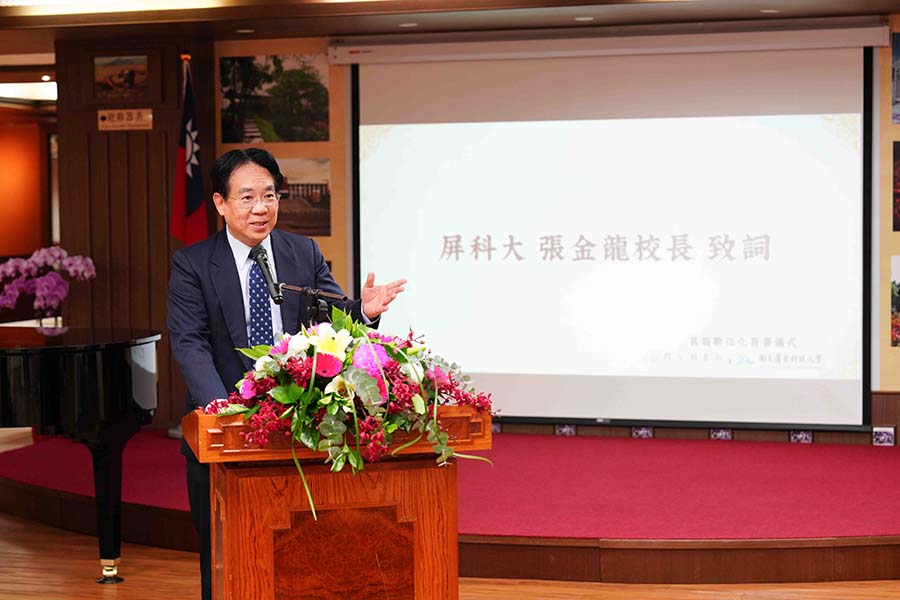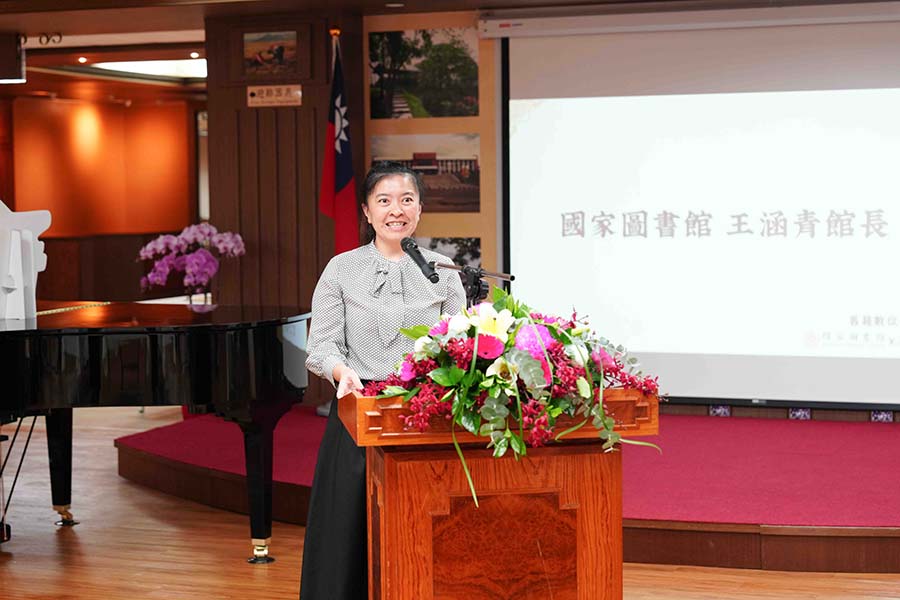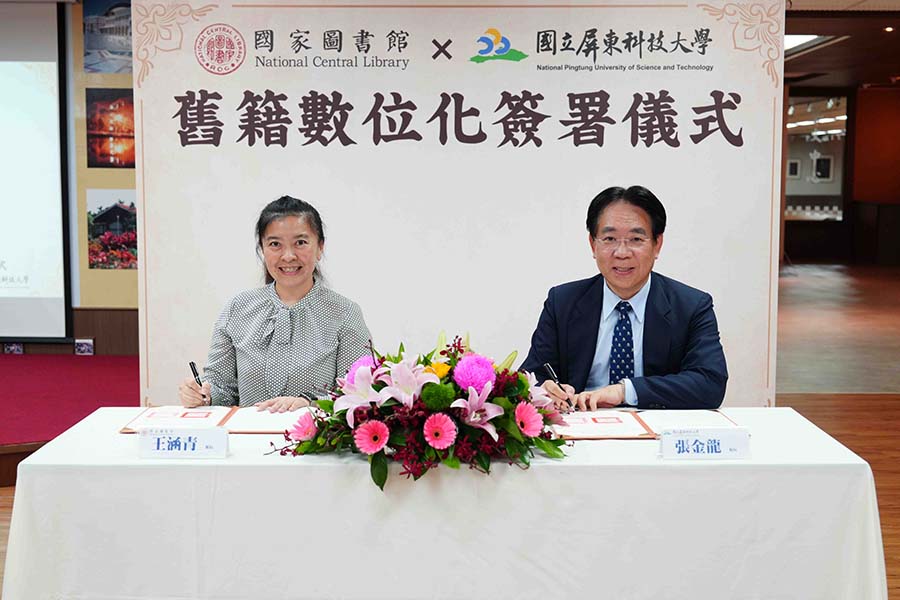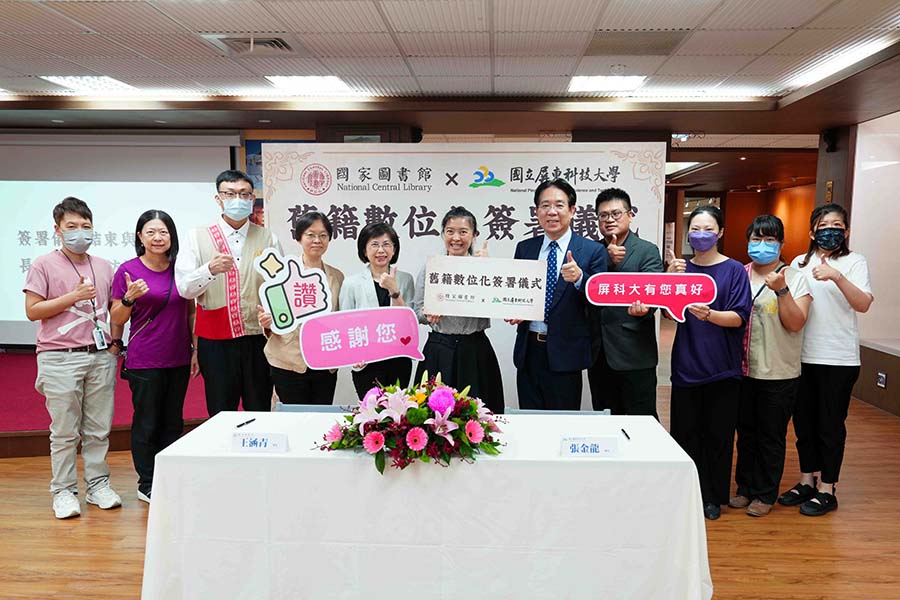

On the eve of NPUST’s centennial celebration, President Chin-Long Chang of National Pingtung University of Science and Technology (NPUST) and Director-General Han-Ching Wang of the National Central Library (NCL) signed the “Cooperative Agreement on the Digitization of Historical Books and Documents (Graduation Albums and Historical Photographs)” on November 5 at the NPUST University History Museum. The ceremony officially marked the launch of a collaborative project to digitize and preserve NPUST’s valuable historical materials.
This partnership focuses on the long-term preservation of significant archival resources that reflect Taiwan’s agricultural and livestock development. Among the collection is the History of Cattle Plague in Taiwan (1925), published by the Government-General of Taiwan, which documents outbreaks of cattle plague in the Kaohsiung–Pingtung region along with corresponding disease-control measures. NPUST’s earliest campus was once the site of one of the serum production facilities established for combating the epidemic, shaping the university’s century-long academic trajectory in agriculture, animal science, and veterinary medicine.
The digitization project will include 104 historical volumes, comprising 25 Chinese books, 79 Japanese books, as well as 20 graduation albums and old photographs. These materials will be preserved digitally, enabling broader resource sharing and enhanced cultural transmission. Launching this initiative ahead of the university’s centennial further symbolizes both a reflection on history and a vision for the future.
President Chang noted that NPUST, founded in 1924, began as an institution rooted in agriculture and animal husbandry, and has preserved a rich collection of agricultural texts and documents from the Japanese colonial era. These records chronicle the evolution of Taiwan’s agricultural and livestock industries. Through digitization, these valuable materials will transcend the limitations of fragile physical archives, granting the public convenient access for research and education. “This collaboration with the National Central Library allows us to systematically organize our historical collections and preserve knowledge through digital archiving,” Chang emphasized. “Our graduation albums and old photographs not only document NPUST’s hundred-year history but also capture changes in campus landscapes and institutional development.”
Director-General Wang highlighted that NPUST has made significant contributions to agriculture, veterinary medicine, and engineering, and that the university’s archival materials hold great research value. Through this collaboration, NCL and NPUST aim to revitalize important historical records related to Taiwan’s agricultural development, showcase NPUST’s contributions, and further reveal the historical trajectory of agricultural education in Taiwan.
By digitizing historical books and documents, the project preserves the original appearance and intellectual value of early works, offering a meaningful way to continue the transmission of knowledge and culture. The results of this collaboration will be made available through platforms such as “Taiwan Memory” and other open-access systems, providing students, scholars, and the general public with enriched opportunities for academic research and historical exploration.